




With a view of integrating sustainability into credit risk management in the financial sector, Nepal Rastra Bank released the Guidelines on Environmental & Social Risk Management (ESRM) for Banks and Financial Institutions in 2018. The objective is to establish the ESRM Framework as the standard process for proactive evaluation and integration of environmental and social issues into the credit risk assessment process of B/FIs.
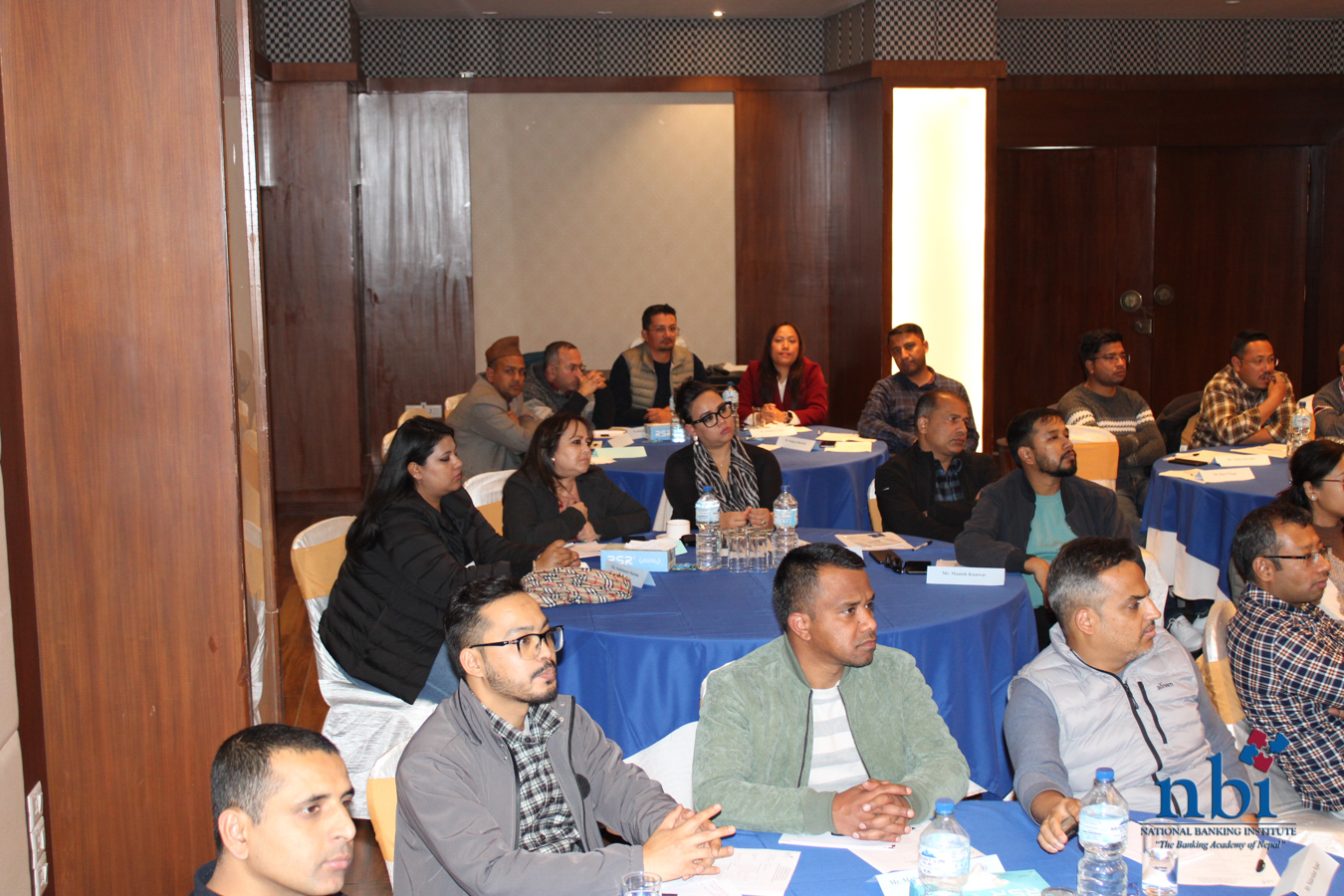
In this context, NBI, in partnership with IFC (India) & ERM, is pleased to present a 2 day training that aims to provide an opportunity for participants to learn about the current international best practices in E&S risk management in financial institutions (FIs), and understand how their implementation improves the performance of institutional portfolios, generates business opportunities, and strengthens competitiveness.
- Discuss & understand how banks can effectively implement E&S Management System/Environment, Social and Governance (ESG) issues and integrate E&S risks into their credit appraisal process.
- Understand how the implementation of ESRM improves the performance of financial institutions and their competitiveness through sustainable banking.
- Understand and be able to convince the client and frame appropriate covenants to protect the interest of the bank in the process of regular enforcement of E&S standards.
- Understand and implement the regulatory requirement of ESRM Guidelines of Nepal Rastra
Bank. - Become aware of current international best practices in E&S risk management in financial
institutions.
Course Content
- Overview of global risk report
- Nepal Context – risk of doing business
- Risk for FIs from failure to manage E&S Issues.
- Emergence of sustainable finance – what, why & how?
- Evolution of international frameworks.
- Roles of prominent international bodies / protocols
- Highlights on Equator Principles
- IFC Performance Standards
- Objective of ESRM
- Guideline Applicability
- ESRM Procedure
- Appraisal, Decision Making and Monitoring
- ESDD Process steps - Step 1 to Step 8
- Understanding of ESDD Process and its Outcome.
- Understanding of Annexures
- E&S Risk Rating & Escalation
- ESMS and Integration into Bank Credit Risk Management.
- Components of an ESMS
- E&S Capacity Planning
- Org chart, Roles & responsibilities.
- Activity – Short video clip on managing E&S risks and ESMS opportunities for banks.
- Quiz: Brain teaser on ESRM procedure.
- Phase-wise monitoring
- Aspects to be covered during monitoring
- Internal & External Reporting
Climate-related risks to BFIs
- Physical risks
- Transition risks
- Impacts of climate risks
- Regulatory overview of the sector
- Key E&S Risks associated with the sector
- Key H&S Risks associated with the sector
Group Activity:
- Group exercise related to the sector to understand E&S risk and
their management. - Video clips on E&S Risk Management